Programme
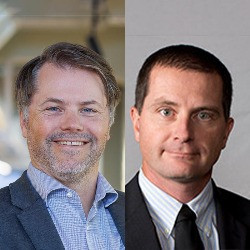
How to deploy an AI Megascale Campus
With Petter M. Tømmeraas – Managing Director Data Center Services, Aker Nscale AS
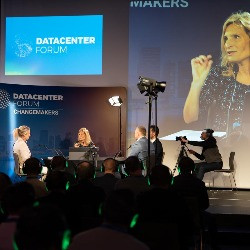
Datacenter Changemakers Norway
Episode 1
Back in Oslo is Datacenter Changemakers Norway, our live talk shows with the people who are changing the face of the data center industry. The most pressing issues facing the digital infrastructure sector will be discussed.

Hosted & moderated by
Liselotte Lyngsø
Founder of Future Navigator
In this episode:
Why international data center investors are so eager to invest in the Nordics
Guests:
Benedicte Fasmer Waaler – Special Advisor, Invest in Norway
Petter M. Tømmeraas – Managing Director Data Center Services, Aker Nscale AS
Reynir Jóhannesson – Managing Director, Norsk Datasenterindustri (the Norwegian Datacenter Association)

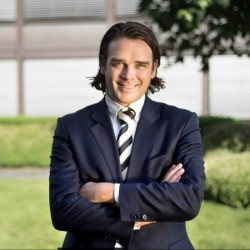
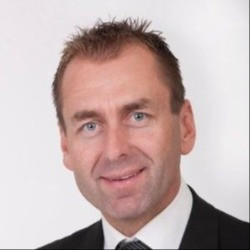
Empowering the Future of AI Data Centers from Grid to Chip
AI is not just increasing power demand; it is reshaping how data centres are designed.
Higher rack densities, new cooling paradigms, and tighter energy constraints require infrastructure to be viewed as a single connected system rather than as separate components.
In this session, Delta Electronics explores the “Grid to Chip” perspective, examining how power distribution, energy storage, UPS technology, and cooling must align from the utility entry point down to the processor level to support scalable, efficient and future-ready data center environments.

Five Data Center Predictions for 2026
Join Tomas Rahkonen for his session on some of the latest developments and challenges currently shaping the industry, looking beyond the more obvious trends of 2026. AI is transforming data center strategies, but its impact remains uneven due to unclear demand, complex infrastructure needs, and long development timelines. Growth in AI workloads will continue to be driven by a small number of large organizations with the resources to deploy high-density systems. Challenges in securing power, managing advanced cooling requirements and capital project delays will persist or intensify. At the same time, AI automation tools will move from pilot projects to operations, delivering measurable efficiency gains. And, as new AI applications begin to show real business value, data center operators will need targeted investments and plan carefully to keep pace.

This presentation will to explore the intersection of two transformative forces within our industry: AI and liquid cooling. This is not just a technical revolution, but a strategic turning point. Those that recognize this now will be the ones who shape the future of digital infrastructure.
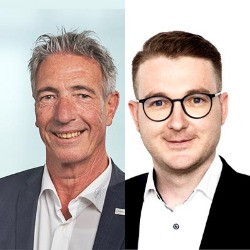
Air Cooling in the Age of AI: Limits, Options, Reality and Outlook
AI workloads are driving higher power densities and fundamentally changing the requirements for air cooling in data centers. Operators and designers are increasingly facing uncertainty: Is air cooling still sufficient? How much airflow is realistically achievable? And how do rising loads and changing operating profiles affect cooling concepts in both greenfield and brownfield projects? This uncertainty is clearly reflected in daily project work through a growing number of design iterations, system comparisons, and operating point evaluations.
This presentation explains how AI is actually impacting air cooling in data centers, where the real technical and building-related limits are, and which room-based air cooling concepts are viable today. It also places liquid cooling in context, showing why air cooling remains essential for handling residual heat, infrastructure layout, and space utilization.
Based on a real project example, the session demonstrates how cooling concepts can be selected in a structured and practical way, taking into account building constraints, available space, CAPEX, OPEX, and carbon footprint.
It shows why air cooling remains a core element of modern data center design, even in the age of AI.

Process efficiencies to tackle data center challenges
Carbon, labor, and cost challenges are tightly linked in data center design and construction. Embodied carbon from building materials is often overlooked, even though it can rival operational emissions. Growing regulations and increasing customer expectations are bringing this issue to the forefront. By prioritizing upfront engineering and leveraging offsite manufacturing, the industry can reduce labor needs, cut material use, and significantly lower embodied carbon.
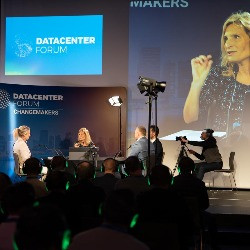
Datacenter Changemakers Norway
Episode 2
Join our live talk show with the people who are changing the face of the data center industry, where we'll discuss the most pressing issues facing the digital infrastructure sector.
Hosted & moderated by
Liselotte Lyngsø
Founder of Future Navigator
In this episode:
A Sovereign & Secure Norway
As geopolitical tensions rise and data becomes increasingly valuable, industry leaders and policymakers must determine how Europe can stay secure and achieve digital sovereignty. What are the crucial steps that must be taken to ensure Norwegian and European data stays secure and accessible? What are the practical challenges of reducing dependency on foreign tech giants while maintaining service quality for end-users, and how can new regulations and investments shape the future of Europe's digital autonomy?
Guests include:
Per Morten Torvildsen – Executive Vice President NetCo, GlobalConnect
Daniel Melin – EuroStack / Business development and strategy, Safespring
Pål Wien Espen – Director of Security, Infrastructure and Defense, TEK Norway


Data Center Market Insights: Norway in a Nordic context
Norway is a significant player within the Nordic region's data centre industry, benefiting from a combination of strategic advantages. This session will examine how Norway compares with its Nordic neighbors, highlighting trends, investment opportunities, and the region’s competitive advantages in attracting global tech players.

Bridging the Talent Gap: Innovative Workforce Strategies for the next generation of Data Centers
The data center industry is experiencing unprecedented growth driven by cloud adoption, digital transformation, and increasing demand for compute-intensive applications such as AI and edge computing. This rapid expansion has exposed a critical skills shortage across technical, operational, and managerial roles, threatening the region’s ability to maintain competitiveness and meet sustainability targets. At the same time, demographic shifts, increased competition for digital talent, and limited vocational pipelines have intensified workforce pressures.
This presentation examines the current talent landscape in the data center sector, identifying the root causes of the skills gap and the most pressing competencies in short supply. It highlights innovative approaches to talent development that industry leaders are adopting to address these challenges, with a particular focus on scalable and inclusive workforce programmes. These include apprenticeship pathways that blend formal education with hands-on experience in critical infrastructure environments, as well as athlete transition programmes designed to help elite sports professionals transfer high-performance mindsets, discipline, and teamwork into technical roles within data centers. By exploring case studies and emerging best practices, this session demonstrates how targeted workforce initiatives can accelerate skills development, broaden participation, and enhance retention.

Building AI factories in Norway
Hosted & moderated by Liselotte Lyngsø, founder of Future Navigator.
With:
Andrei Soloviev – Sales Manager Nordic-Baltic, Victaulic
Petter M. Tømmeraas – Managing Director Data Center Services, Aker Nscale AS


Nordic Data Centers in a Global Context: Trends, Challenges, and Comparisons
The Nordic data center industry is evolving rapidly, shaped by sustainability initiatives, AI-driven demands, and workforce shortages. This session presents key findings from the latest industry survey, comparing trends in the Nordics with other global markets. We will explore how the region stands out in areas like energy efficiency and regulation, while also addressing challenges shared with the rest of the world. Join us for a data-driven discussion on the future of data centers in the Nordics and beyond.
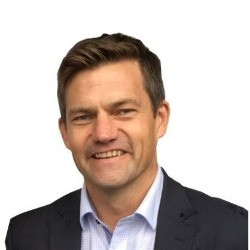
Speed, Scale, and Solutions: Norway's Path to AI Infrastructure Dominance
In recent years, Norway has designed, built, and put into operation global leading AI infrastructures. Norway are winning contracts. The development is fast, the investments are enormous and the demands from end customers are high. Time to market is critical, design changes rapidly, and solutions coming to market in three years need different infrastructure solutions than we have today. How does the Norwegian ecosystem continue to gain market shares and what are the hurdles?

Navigating the Cyber & Digital Journey Ahead for Nordic Data Centers
Cool, calm and collected – and now what? Join Siemens experts Amalie Lønning (Cybersecurity Portfolio Manager for the Nordics) and Johanna Wendesten (Digital Portfolio Manager for the Nordics) as they address the critical cyber and digital evolution for Nordic data centers. This presentation will examine how to strengthen electrical infrastructure protection against evolving cyber threats and leverage digitalization to transform data centers from passive energy consumers into active grid contributors through flexibility services. Discover security strategies for protecting operational technology systems and explore how smart monitoring enables data centers to provide load balancing and demand response capabilities.

Heat Transfer: Enabling the Shift to Liquid Cooling and Heat Reuse
AI is pushing power densities to new extremes, turning every watt into valuable heat.
This presentation reveals why liquid cooling and heat reuse are becoming the new industry standard.
And how high‑performance heat transfer makes it all possible.

Rethinking Cooling: Energy Storage for Air-Cooled Data Centers
Cooling duties constitute a large part of the total energy consumption for data centres. In most cases, both the demand and supply of energy required for cooling fluctuates considerably. Cooling systems have to be dimensioned accordingly. By including a energy buffer (energy storage) in the cooling systems, peaks in demand can be smoothed and a steady supply of energy is ensured during periods of low availability in the markets. As most data centres are air-cooled, this requires solutions for energy storage capable of handling large gas-flows.
Until now, no effective solution for high capacity energy storage for large gas flows have been proposed. The concept developed by SINTEF addresses this gap in technology.

Presentation title TBA
Photo: Thomas Brun
The Grid Will Fail. Will Your Data Center Keep Running?
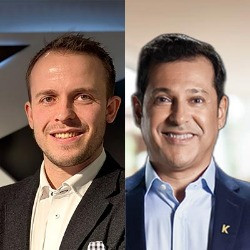
Geopolitical tension, extreme weather, and accelerating energy demand are putting power grids under unprecedented pressure, making data center downtime increasingly likely. In this session, Sigmund Aarflot from Satema explains why resilient backup power is becoming critical to data center operations, and how global expertise combined with strong local presence strengthens resilience. Norwegian-built solutions, local service capability, and strategic partnerships with players like Rehlko are critical to maintain uptime, reduce emissions, and control lifetime costs — when failure is not an option.
With Hamid Aribi - Global Business Development Manager, Rehlko

Setting the scene for a sustainable growth of skills and our people
Our industry’s greatest challenge isn't just scaling power or cooling, but cultivating the human talent required to construct and operate Data Centers (DC). We are moving beyond the era of 'hiring to fill gaps' and transitioning into a strategic phase where people are viewed as our most valuable and long-term infrastructure asset. To achieve sustainable growth, the responsibility for talent development must be considered at the outset for all new DC developments and be shared with our clients/owners providing the initial capital. When human capital is considered as a foundational element of the initial investment, it transforms from an operational challenge into a long-term commitment that compliments the new DC campuses.

Building Tomorrow’s Data Center: Exploring Prefabricated Infrastructure Solutions for AI, HPC and High-Density Data Centers
The rapid expansion of AI and high-performance computing is pushing traditional data centers to their limits, necessitating a shift toward prefabricated infrastructure to handle rising power and cooling demands. This session explores how modular, integrated power and cooling "blocks" streamline deployment and improve scalability for high-density workloads. By focusing on core design principles rather than granular engineering, the discussion demonstrates how prefabrication reduces on-site complexity and risk while ensuring long-term operational resilience.
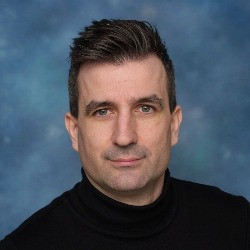

How Do We Accelerate Decarbonization?
This presentation is our response to the Net Zero Data Centers RFI, focused on identifying innovative, sustainable, and scalable backup power solutions to support the future of digital infrastructure.

Data Centers and Society: Facts Versus Myths
In the Norwegian energy debate, data centers are often portrayed as a high‑profile and controversial industry. The discussion is shaped by concerns around power consumption, grid capacity, environmental impact, and local acceptance. A common perception is that data centers deliver limited value to local communities.
In this session, Mette Gulbrandsen from Green Mountain will challenge some of the most persistent myths surrounding the data center industry. The presentation will focus on real economic impact, practical sustainability measures, and the role data centers play in local and regional value creation. It will also highlight why suppliers and partners are a critical part of the solution—and how the industry as a whole must take greater responsibility to build long‑term societal acceptance in Norway.
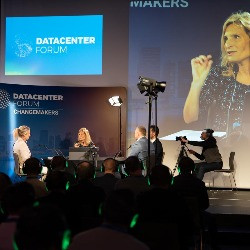
Datacenter Changemakers Norway
Episode 3
Join our live talk show with the people who are changing the face of the data center industry, where we'll discuss the most pressing issues facing the digital infrastructure sector.
Hosted & moderated by
Liselotte Lyngsø
Founder of Future Navigator
In this episode:
Power Play: Norway's Energy Evolution
Energy – from a supply, distribution, and security standpoint – has become a national concern. Data centers increasingly face a significant challenge to growth and future investment: access to electricity. How can Norway continue to capitalize on its competitive energy advantage and generate new investment opportunities in the coming years? Data centers are emerging as both a challenge and a solution. How can they contribute to grid stability, load balancing, and heat reuse, while managing their growing electricity demand?
Guests include:
Kevin Gould – Lead Commercial Advisor, Statkraft
Pelle Gangeskar – Country Manager Norway, hscale
Benedicte Fasmer Waaler – Special Advisor, Invest in Norway

Sponsors & Partners
Gold sponsor
Silver sponsor


Bronze sponsor










Associate sponsor